
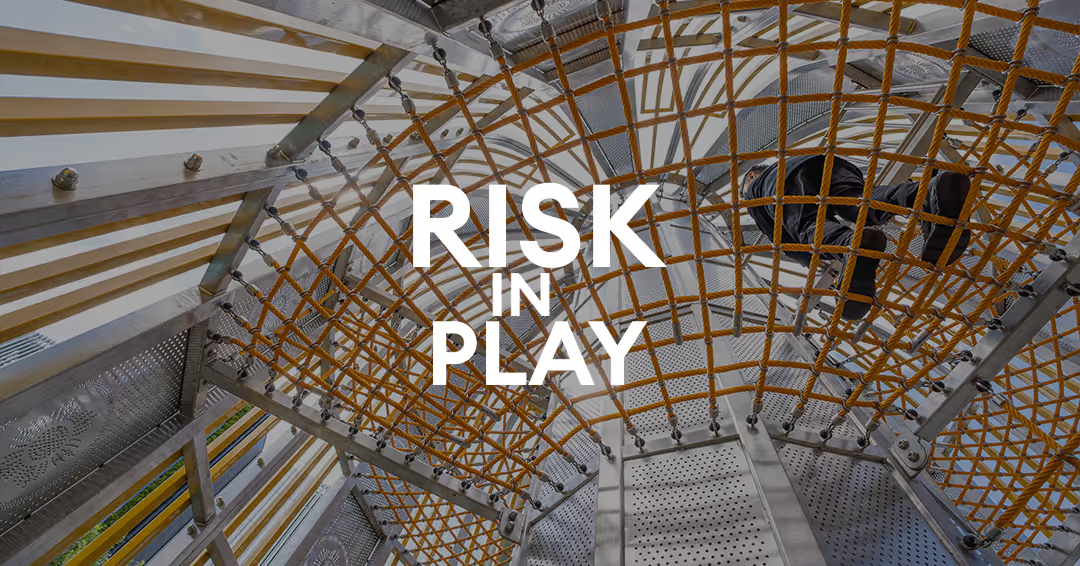
Risk in play
We all want to protect our children. When they come home with a scrape or bruise, our first instinct is to worry. But play research shows that a little risk is not just unavoidable. It’s essential for healthy development.
For decades, play experts and psychologists have argued that removing all risk from play also removes crucial opportunities for growth and development. The Play Safety Forum insists that children need manageable levels of risk so they can explore, learn, and become more resilient.
Let’s explore why risk matters, what the research really says, and how positive risk can be built into play spaces in a safe way.
Risk vs hazard
One of the key points in play theory is the difference between risk and hazard.
Risk is a challenge that a child can see, understand, and choose to take. Climbing a rope net, balancing on a beam, sliding faster than expected, or racing over uneven ground for example.
Hazard is a danger a child cannot predict. For example, hidden sharp edges, faulty or poorly made equipment, dangerous gaps or traps, or an unprotected sudden drop.
Play experts Tim Gill, Professor David Ball, and Judith Hackitt argue that the goal is not to eliminate all risk but to remove genuine hazards. If children are overprotected, they lose opportunities to learn judgment and develop confidence.
Why children need managed risk
Research by Dr Ellen Beate Hansen Sandseter and others identifies six types of risky play that support healthy development. These are:
- Play at height
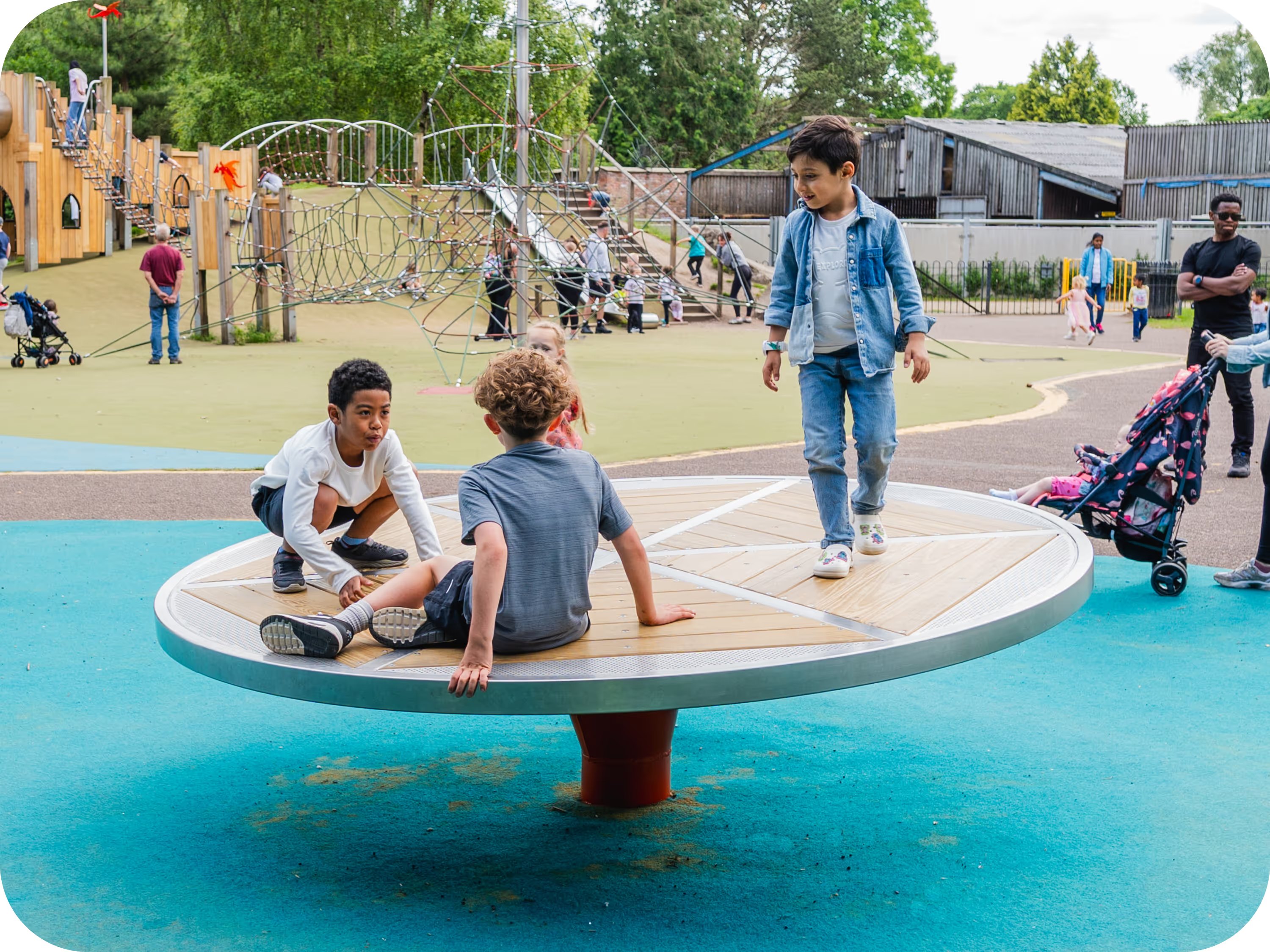
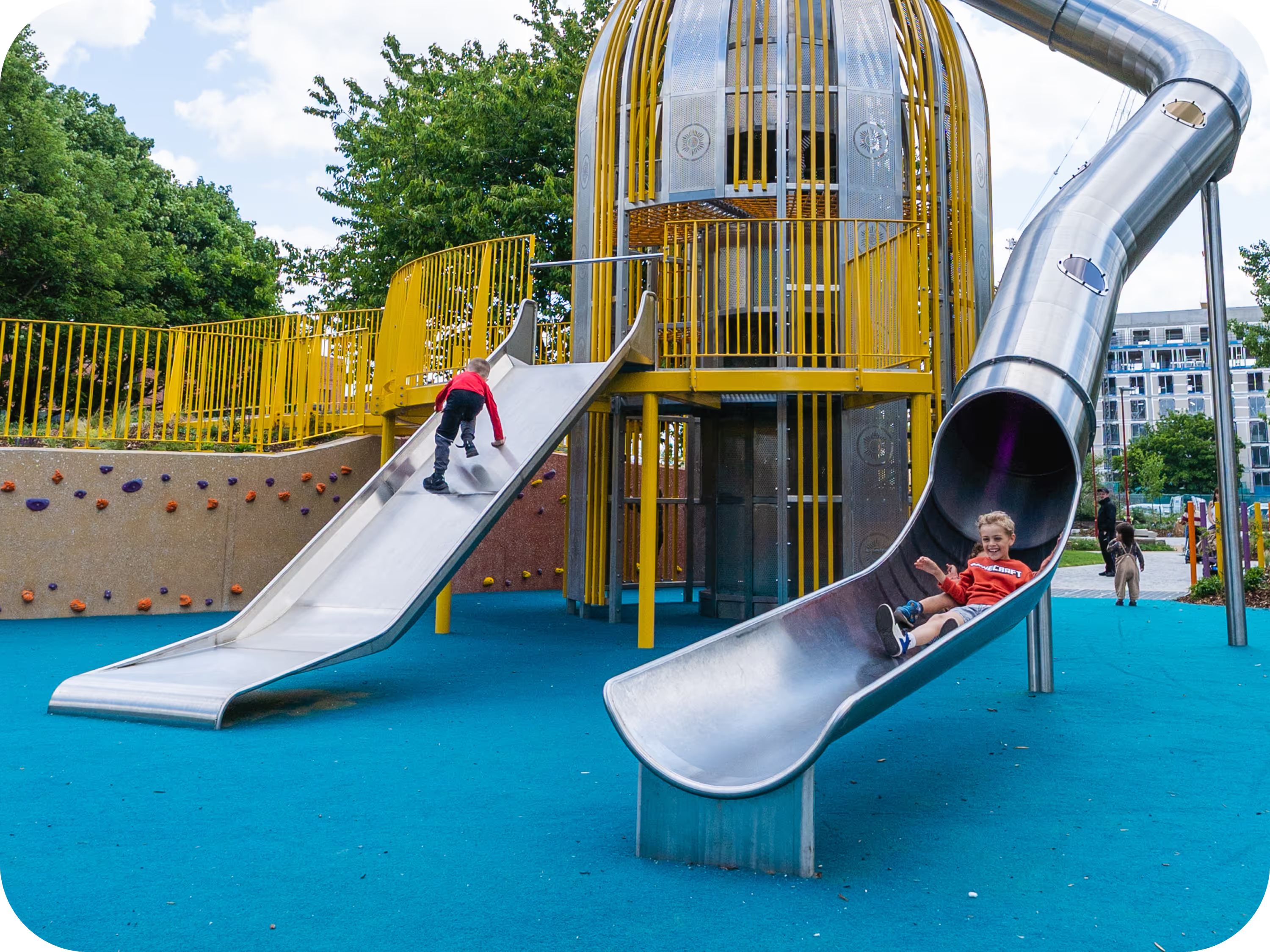
- Play at high speed, such as fast slides or running
- Play with potentially dangerous tools/objects
- Play near risky elements such as water or fire
- Rough and tumble play
- Play where children can be independent or explore alone
These types of play are not just thrills. They help children grow in many ways:
- Physically: children develop balance, coordination, strength, and motor planning
- Emotionally: they build confidence, resilience, and strategies for dealing with fear
- Cognitively: they learn to judge risk, make decisions, and solve problems
- Socially: they practise negotiation, leadership, turn-taking, and cooperation
Every time a child climbs higher, swings faster, or navigates a challenge, they are doing more than just playing, they are learning.

The problem with removing all risk
Concerns about injury, complaints, or legal issues have led some playgrounds to remove much of the challenge. The result, play spaces that feel sterile, with low platforms, soft surfaces everywhere, predictable layouts, and minimal movement.
Children naturally seek challenge. If a playground does not offer it, they will:
- Invent riskier ways to use the equipment that is there
- Lose interest in the playground completely
- Seek excitement elsewhere, often without supervision
Playgrounds that are too safe can become their own kind of hazard because children will make their own risk.
Children and unexpected play behaviour
Children rarely use play equipment in the way it was intended. They might climb up a slide, swing from the side of a roundabout, or create entirely new games.
This creativity is more than fun. It is a key part of development. Exploratory play helps children:
- Discover their abilities
- Develop independence
- Assess consequences
- Build creative problem-solving skills
Allowing children the space to explore risk is natural, healthy, and important.
How standards support positive risk
Standards such as BS EN 1176 protect children from real hazards. Modern playground standards are not about removing all challenge. They are about managing risk responsibly. This includes:
- Ensuring fall heights are safe
- Using impact-absorbing surfaces
- Spacing equipment to allow safe movement
- Keeping clear sight lines
- Preventing entrapment points
- Reducing unpredictable hazards
Well-designed playgrounds follow these standards so children experience real challenge safely.
What positive risk looks like in practice
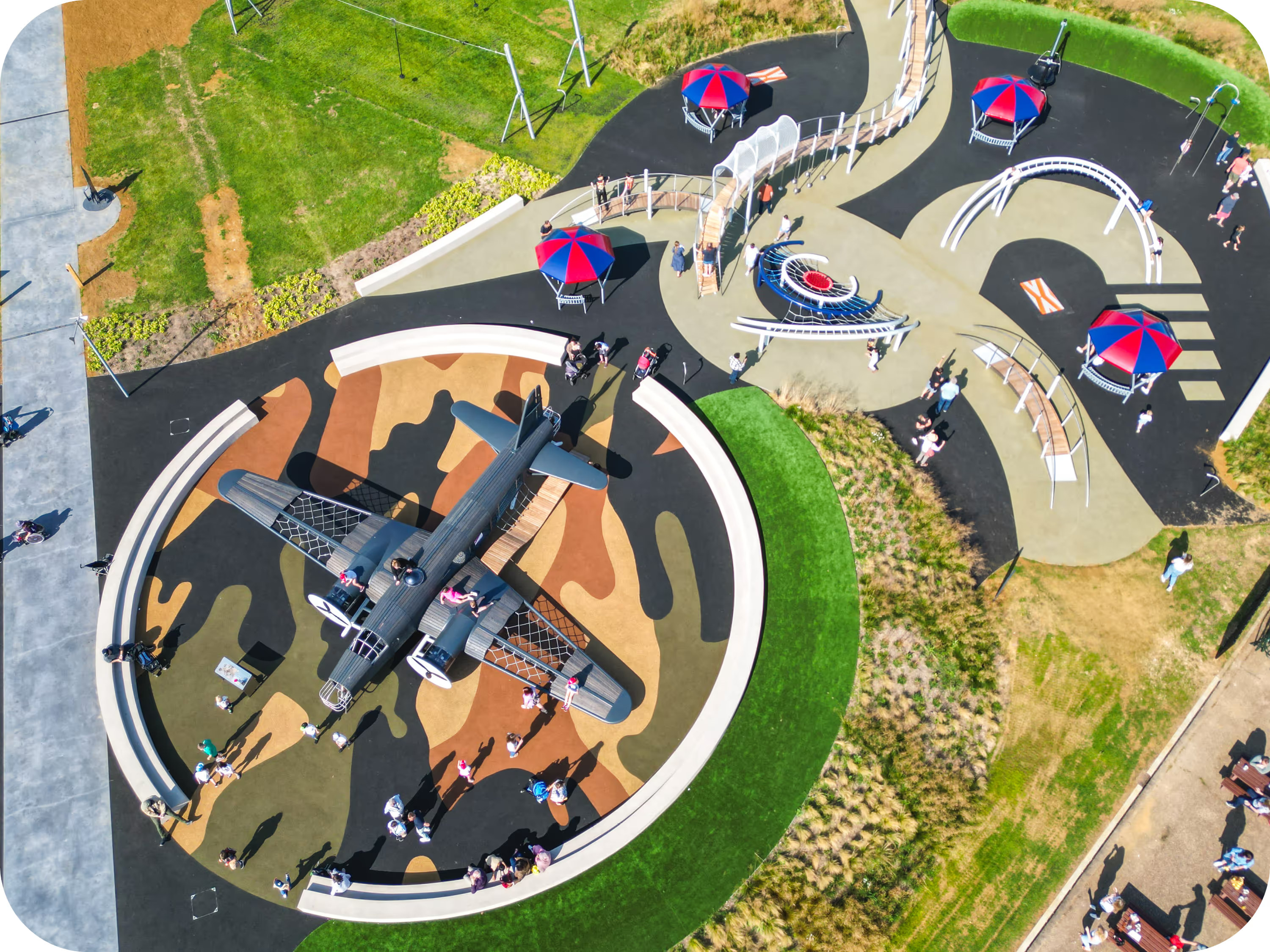
A playground that supports healthy risk-taking could include:
- Platforms at varying heights
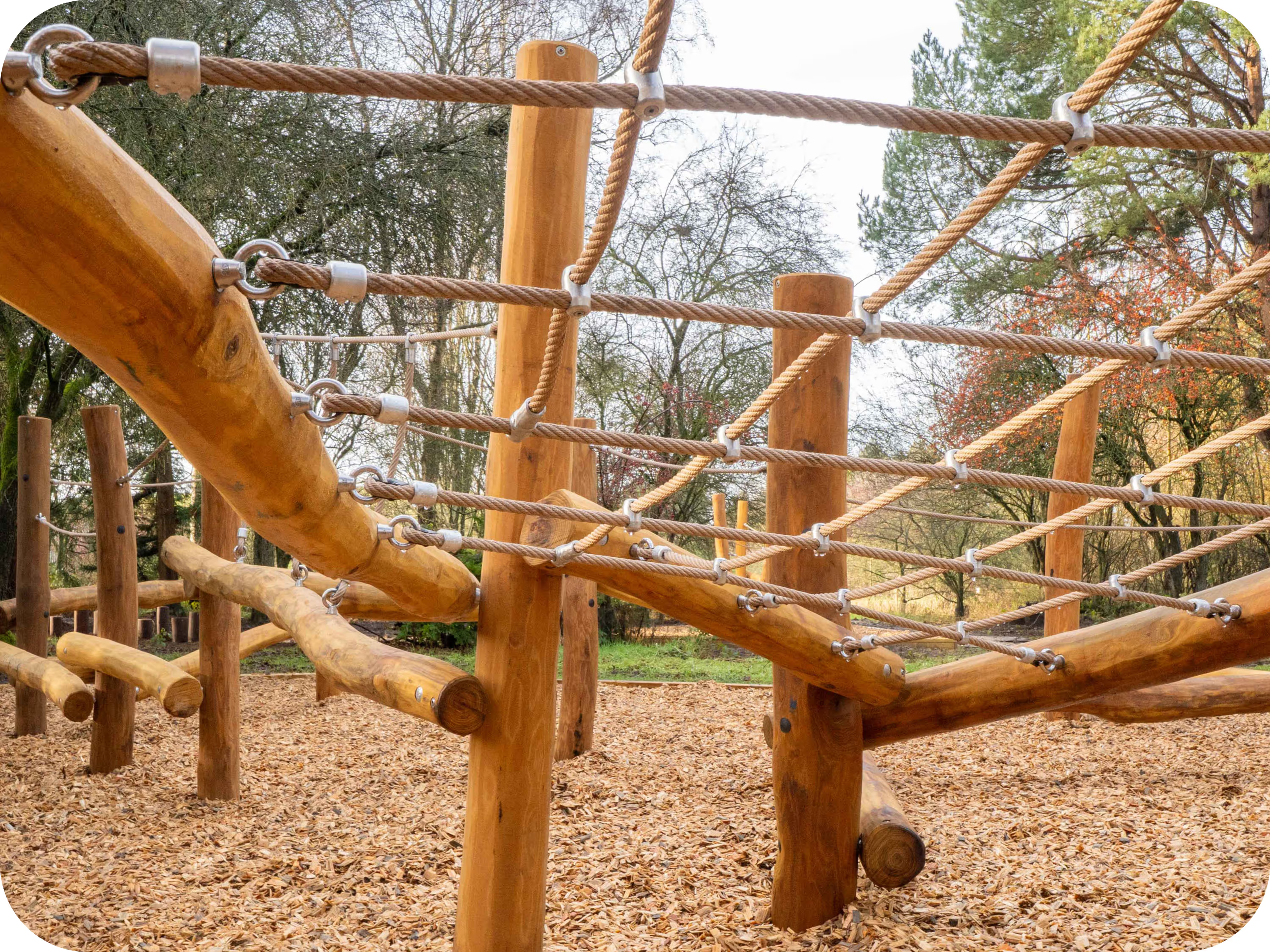
- Ropes and nets to test balance and strength
- Swings, spinners, gliders, or zip lines to encourage dynamic movement
- Pathways with multiple routes to explore
- Spaces for imaginative or social play
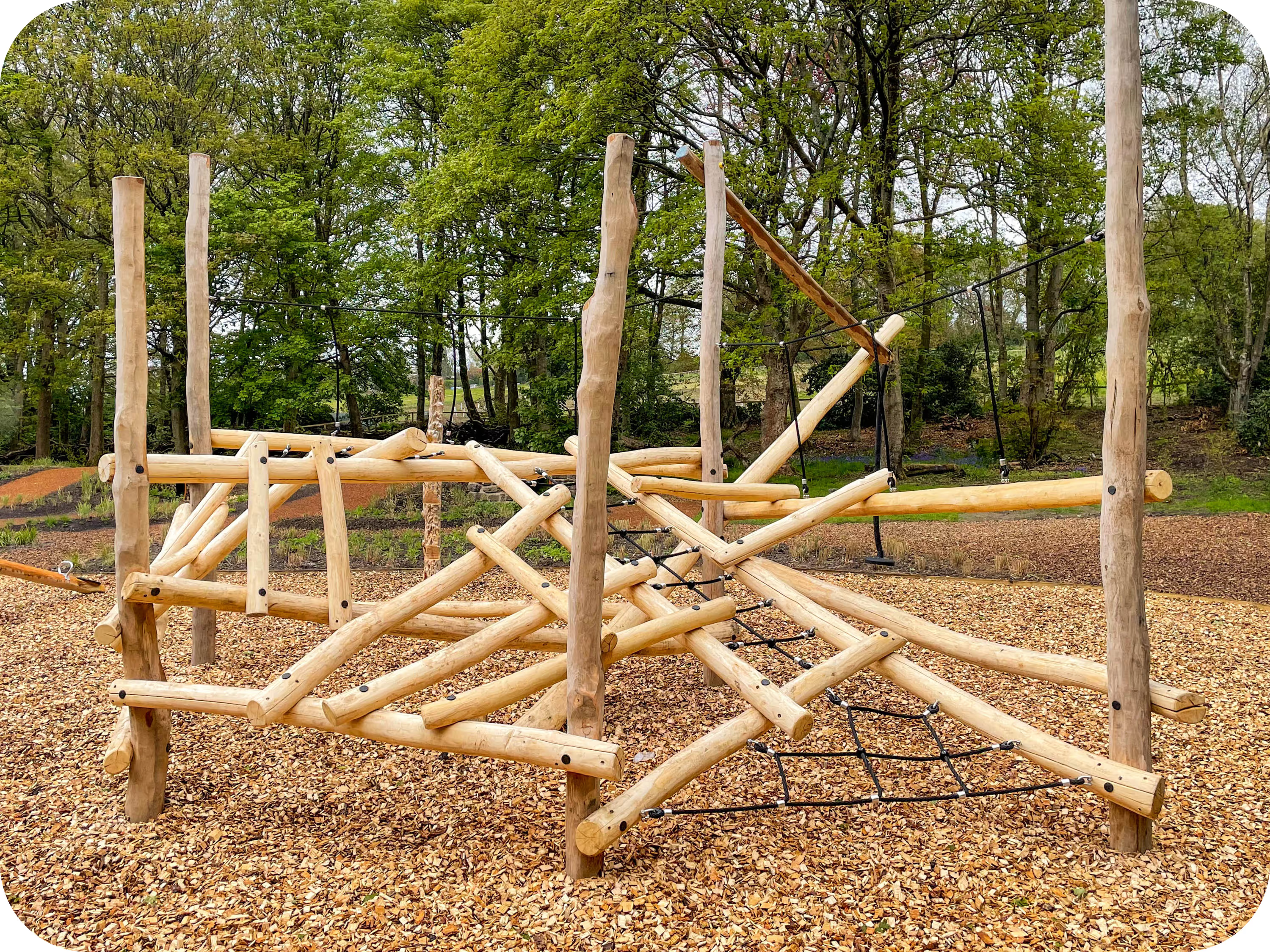
- Natural, uneven features such as logs, stones, or trees
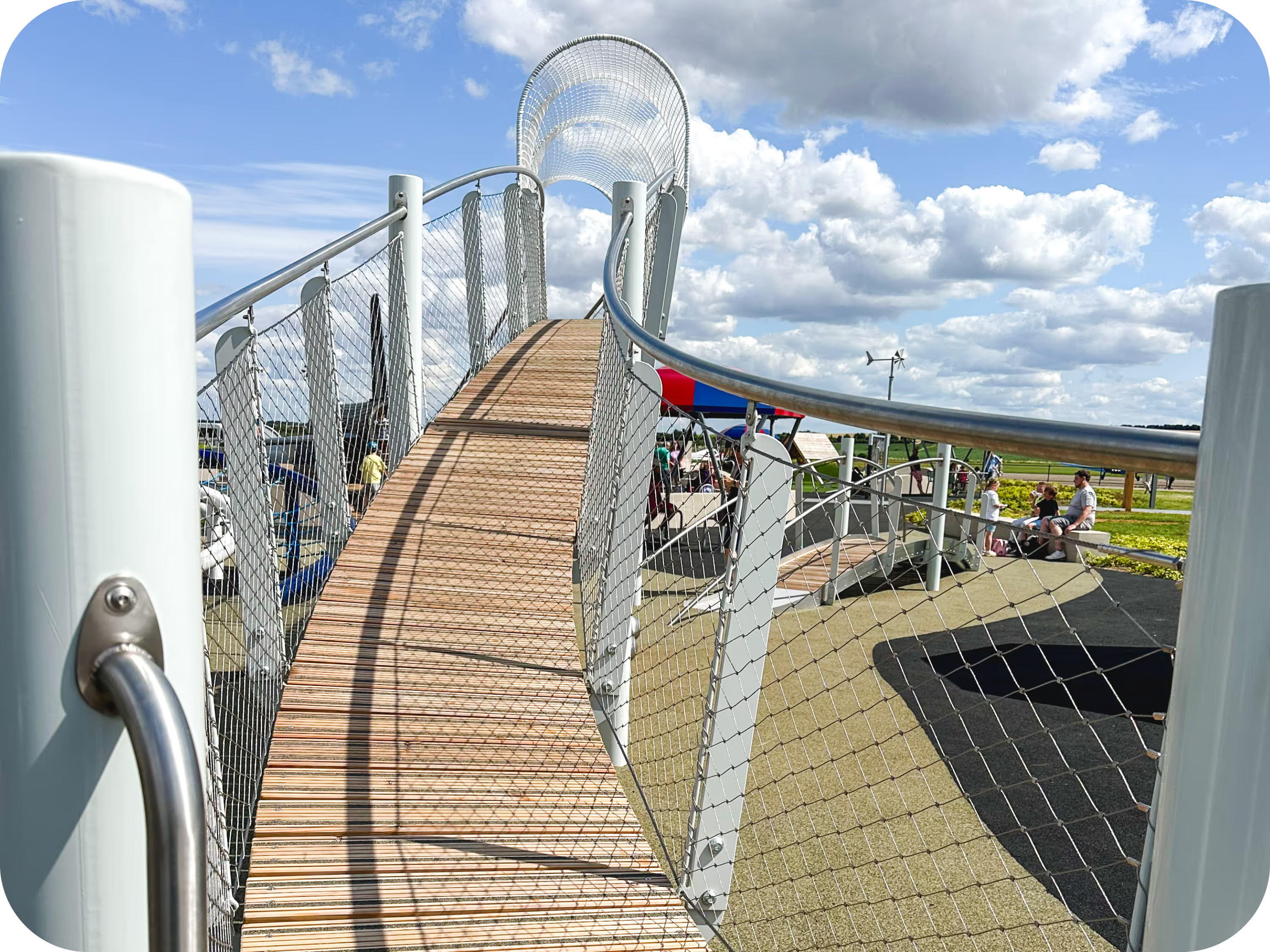
- Equipment that feels risky but is safely contained, such as high spaces enclosed with rope or mesh
These features are not reckless. They are carefully thought-out challenges in a controlled environment.
The bigger picture
Positive risk in play helps children learn to:
- Test their limits
- Fail safely
- Build resilience
- Make decisions
- Trust their own abilities
- Manage fear
- Cope with uncertainty
- Celebrate achievement
These are not just playground lessons. They are life lessons. Playgrounds that challenge children are responsible, encouraging, and empowering. Without risk, we remove the opportunity to grow.
Final thought
Great playgrounds do not aim for zero risk. They aim for balance. They give children room to stretch what they can do, discover new strengths, and build confidence while keeping real danger properly managed.

References
Ball D (2002) Playgrounds: risks, benefits and choices. Health and Safety Executive.
Ball D and Ball-King L (2014) Risk and the perception of risk in children’s play. In: Brown F and Perkins E (eds) Play and Playwork: 101 Stories of Children Playing. Open University Press.
Gill T (2007) No Fear: Growing Up in a Risk-Averse Society. Calouste Gulbenkian Foundation.
Gill T (2010) Nothing ventured: Towards a balanced approach to risk in children’s play. Children’s Play Policy Forum.
Hackitt J (2017) Challenging perceptions of health and safety. Health and Safety Executive.
Play Safety Forum (2015) Managing Risk in Play Provision: Position Statement. Play Safety Forum.
Sandseter EBH (2007) Categorising risky play – how can we identify risk-taking in children’s play? European Early Childhood Education Research Journal, 15(2): 237–252.
Sandseter EBH and Kennair LEO (2011) Children’s risky play from an evolutionary perspective: The anti-phobic effects of thrilling experiences. Evolutionary Psychology, 9(2): 257–284.
Ball D, Gill T and Spiegal B (2012) Managing Risk in Play Provision: Implementation Guide. National Children’s Bureau.
